Solace Java RTO API Developer Guide
The Solace Messaging API for Java RTO is a robust and high-performance API designed to enable Java applications to interact seamlessly with the Solace event broker. The Solace Java RTO API provides comprehensive support for message exchange patterns such as point-to-point and publish-subscribe, offering advanced messaging features to handle high-throughput, low-latency environments.
To get you started, here is a brief overview of some of the key messaging concepts used in the Solace Java RTO API:
Contexts
The Solace Java RTO API uses processing contexts for organizing communication between an application and a Solace event broker. Contexts act as containers in which zero or more sessions are created and session-related events can be handled. A context encapsulates threads that drive network I/O and message delivery notification for the sessions and session components associated with that context. For the Solace Java RTO API, a single thread is used for both I/O and for notification. The life cycle of a context‑owned thread is bound to the life cycle of the context.
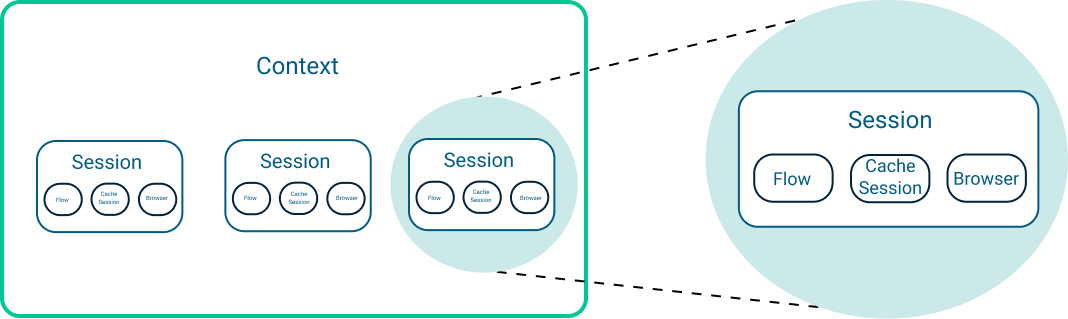
For more information on contexts in the Solace Java RTO API, see Creating Contexts.
Sessions
A session creates a single, client connection to an event broker for sending and receiving messages. When a context is established, one or more sessions can be created within that context.
A session provides the following primary services:
-
client connection
-
update and retrieve session properties
-
retrieve session statistics
-
add and remove subscriptions
-
create destinations and endpoints
-
publish and receive Direct messages
-
publish Guaranteed messages
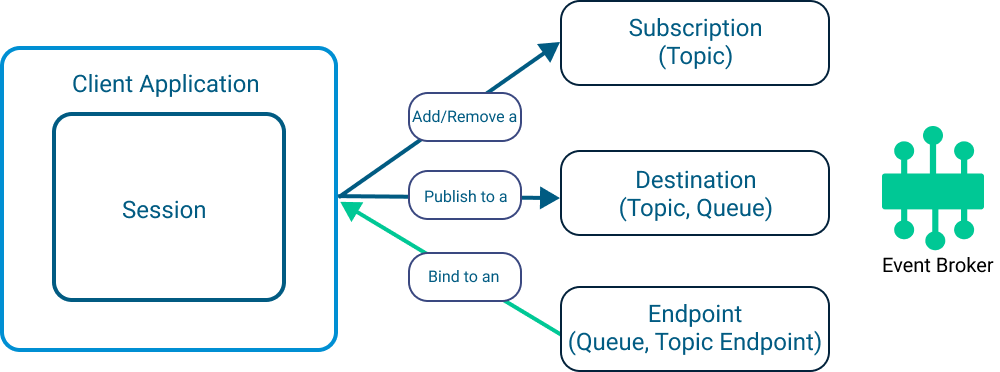
For more information on sessions in the Solace Java RTO API, see Creating Client Sessions.
Flows
A consumer flow is an API object that allows applications to receive Guaranteed messages from an endpoint, such as a Queue. It is created by a session. To receive Guaranteed messages, a client must create a consumer flow within a session, and bind that flow to an endpoint on a Solace event broker that messages are published or attracted to.
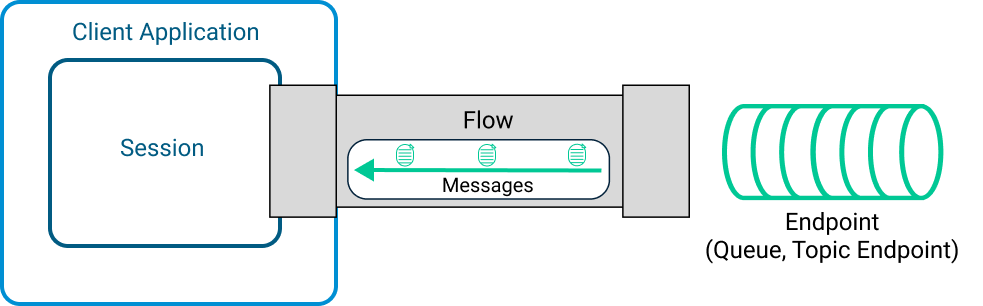
For more information on flows in the Solace Java RTO API, see Creating Flows.
Other helpful links: